

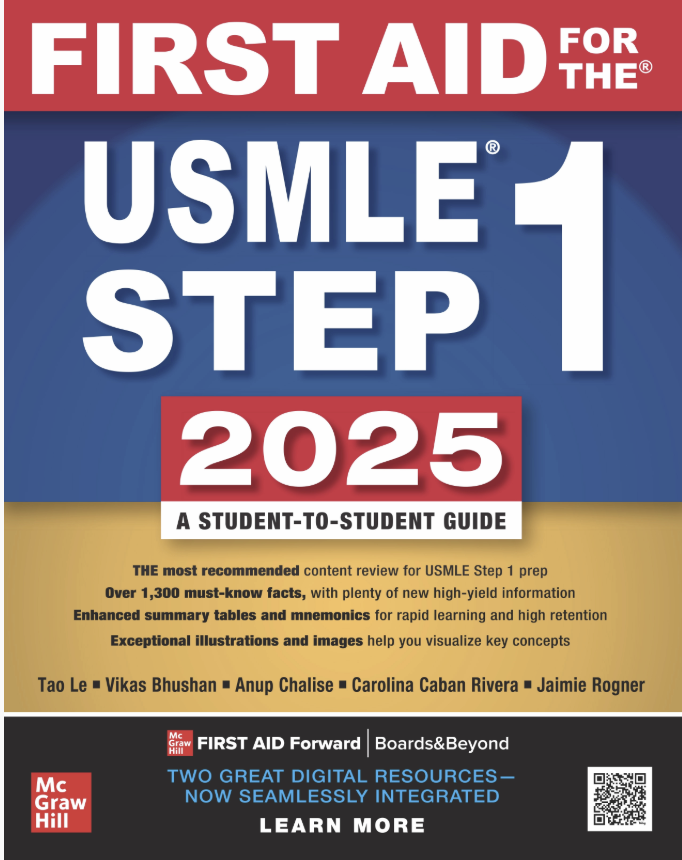
Excellent choice! First Aid for the USMLE Step 1 is the undisputed cornerstone resource for Step 1 preparation, and planning for the 2025 exam means you’re thinking ahead strategically.
Here’s a comprehensive breakdown of what you need to know about First Aid for the USMLE Step 1 in the context of the 2025 exam.
The 2025 Edition: What to Expect
The book is updated annually, usually released in December/January before the exam year. The First Aid for the Step 1 2025 edition will likely be published in late 2024.
Key Anticipated Features for FA 2025:
Reflects the “Pass/Fail” Era: The focus will continue to be on high-yield concepts needed to pass, not on esoteric details once needed for a competitive score. The content is streamlined for efficiency.
Integration of NBME Content: The authors analyze released NBME forms and student feedback to emphasize topics that are frequently tested.
Updated Visuals and Mnemonics: New diagrams, tables, and memory aids based on recent exams.
Revised Rapid Review Section: The final section of the book, perfect for last-minute cramming, will be updated with new facts and associations.
Errata Correction: Previous years’ errors are corrected.
How to Use First Aid Effectively for Step 1 (2025)
The book is not meant to be read like a novel. It’s a review framework and reference guide.
Foundation First, Not First Resource: Do NOT start your prep by reading FA cover-to-cover. Use it alongside your primary resources:
Pathoma: For pathology (Chapters 1-3 are gold).
SketchyMicro/Pharm: For microbiology and pharmacology.
Boards & Beyond, Pixorize, Physeo: For integrated video lectures on physiology, biochemistry, etc.
UWorld: The ultimate QBank. Use FA to review topics you get wrong.
The Annotating Method: The classic, proven strategy. As you go through UWorld, Pathoma, Sketchy, etc., write high-yield notes, connections, and mnemonics directly into the margins of your First Aid. By the end of your prep, it becomes your personalized, all-in-one study guide.
Active Recall & Spaced Repetition:
Anki: The most popular method. Pre-made decks like AnKing are incredibly powerful because they tag cards directly to specific pages and lines in First Aid (and other resources). This allows you to unsuspend cards as you study topics, creating a seamless integration between FA and active recall.
Use the Rapid Review Section: Cover the right column (the “answer”) and quiz yourself on the left column (the “cue”).
Systems-Based Review: Organize your study by organ systems (e.g., Cardiology, Renal). Study that system using B&B/Pathoma, do the relevant UWorld questions, and then solidify everything by reviewing that chapter in First Aid
Leave a Comment